Stop rebuilding stale Excel reports. Get them live in weeks, not quarters.

Custom reporting for Manufacturing and Construction

Job cost, WIP and production reports built around your numbers and your workflows, connected to the systems you already run. They refresh on their own, filter and drill down in a click, and give you back the days spent every month copying, pasting and fixing formulas.

  • First look in 1–2 weeks of getting connected
  • Built on Vista, CMiC, JDE, Epicor and more
  • You own the code and the data
See example reports
Live demo · the real grid Open the live demo

Built to replace

The reports your team rebuilds by hand, every single month.

  • The WIP schedule rebuilt in Excel every month-end
  • Job-cost exports pasted into a master workbook
  • Production and scrap logs kept on a shared drive
  • VBA macros nobody dares to touch
  • SSRS reports that take a week to change

Experience integrating data from

ERP

  • Vista Viewpoint
  • CMiC
  • JDE
  • Epicor
  • Coins
  • NetSuite
  • Dynamics
  • FACS

CRM / Other

  • Zoho
  • FreshDesk
  • Compass
  • Lasso
  • ADP
  • Concur

Don’t see yours? If it has a database, an API or an export, I can pull from it.

Before and after · demo

The same report, minus the Monday-morning copy-paste.

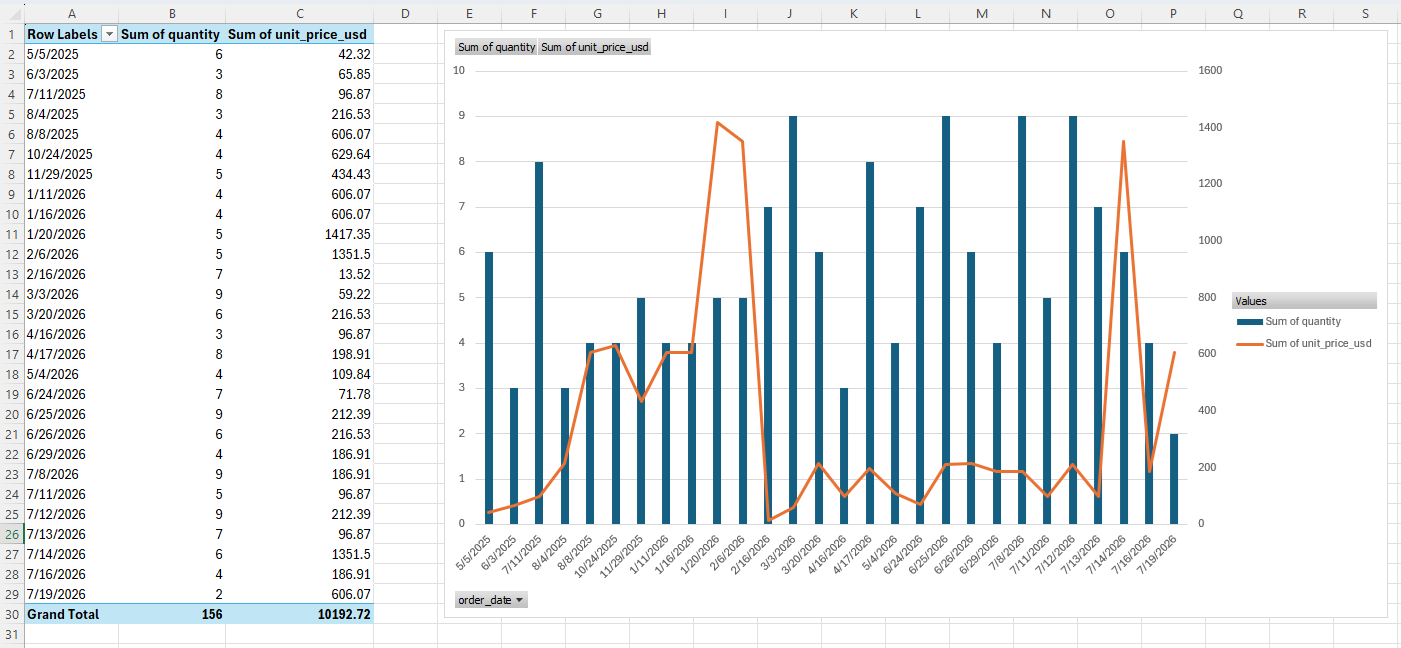
A demo on sample data: the Excel report on top is the kind of thing that gets rebuilt by hand every week. Underneath is the same breakdown rebuilt from the same rows — the numbers agree to the cent, and nobody pasted anything.

Before

Demo — the old way: an Excel pivot table and its combo chart over the sample data, rebuilt by hand each time

After

Demo — the MVP FastPass version: the same breakdown, live

Live demo · the same breakdown
Live demo · quantity against unit price

How it works

Three steps between “I need a report for this” and people using it.

1

Connect or build the data

Already have a data warehouse? I plug straight in. If not, I build one and set up automatic feeds from your ERP (Vista, CMiC, JDE, Epicor), payroll, CRM and other systems — typically 2–4 weeks before reporting starts.

SQL ServerSnowflakePostgresBigQuery
How the warehouse and pipelines are built
2

Shape the report with you

A short discovery session gives me what I need to turn the idea into a first version. Show or tell me how you want the report to look and function; I’ll share ideas and explain how each option affects price and timeline. You get a first look at your first report 1–2 weeks after I’m connected to your data.

ChartsData gridsFilters & drill-down
Try the live demo reports
3

Ship it, then iterate

Your first working report goes live with the right people having the right access. Changes take days, not weeks and tickets. Editable notes, forecasts and custom fields are included, so the report grows with the team.

PermissionsEditable reportsScheduled refresh
How sharing works

What it looks like · live demos

Real visuals and data grids, running on sample data.

See all examples
Live demo · projects with nested tasks Open the live demo

Every project, with its tasks underneath

Every sample project with its owner, dates, status, budget and actual cost, and each project’s tasks nested right under it. Open a project to see who has each task, when it was due and whether it’s done, without leaving the list or opening a second report. The project tracker that usually lives in a spreadsheet with a tab per job — sort and filter the columns, they are the real ones.

Live demo · pivot matrix Open the live demo

The pivot table, without the pivot table

Revenue by product category against customer segment, shaded so the big numbers stand out, with totals on both edges. The month-end Excel pivot, except it refreshes itself and nobody has to rebuild it.

Live demo · ranked groups Open the live demo

Ranked by product category

The same rows ranked rather than totaled: which product categories bring in the most revenue, largest first, so the answer is read off the top of the chart instead of hunted for in a legend.

What you get

Everything the spreadsheet couldn’t do.

One trusted source for the numbers

Already have a warehouse? I work inside it. No warehouse yet? I stand one up and build the pipelines that keep it fresh, so every report reads the same numbers instead of whichever export someone pulled last.

How the warehouse and pipelines are built

Interactive visuals and fast grids

Charts that filter each other, grids that sort, group, and export, and drill-downs that go from the summary to the row in one click — so the answer comes out in the meeting, not a day after it.

Try the live demo reports

Editable reports, where the report calls for it

Add notes, flags, forecasts, and custom fields right in the report. It's stored properly, audited, and available to every other report — not in someone's local copy.

Try the editable demo grid

Permissions that match your org

Who can see which rows, who can edit which fields, who can approve. Row-level and field-level, tied to your existing logins — so one report serves every PM, owner and sub, with no copy per person.

Sharing with people outside the company
Dominic Tripodi
Dominic TripodiFounder & developer, Dom Trip Code

Who you'll be working with

You work with the person writing the code.

I'm Dominic. I scope the project, build the warehouse and the pipelines, write the reporting app, and answer the email when something needs changing. There is no account manager between you and the person doing the work.

I bring multiple years of experience with over a dozen Manufacturing and Construction companies, building reporting, data warehouses and ETL around the spreadsheets those businesses run on. MVP FastPass turns that experience into a running app in your hands in weeks, not quarters.

  • One person from the scoping call to the last change
  • I read and answer every email myself, within three business days
  • Your cloud, your code, your warehouse — no lock-in

Bring the report idea. I’ll bring the FastPass.

A 30-minute scoping call is enough to tell you whether it’s a two-week build or a two-month one — and what it will cost.